






Between a $375/month platform subscription and a $300,000+ custom build, the pricing landscape for voice AI is wide enough to make any business case feel like guesswork. Pick the wrong approach and you’ll either overpay by 5–10x on per-minute fees or end up rebuilding from scratch within a year.
This guide breaks down voice AI development costs by approach, pricing models, components, and industry — so you can budget with precision and skip the pricing traps that catch most first-time buyers.
Table of Contents
Key Takeaways
- Approach Dictates the Budget: Your overall voice AI development costs will vary by 5–10x depending on whether you choose an off-the-shelf platform, a cloud-plus-custom hybrid, or a fully custom build.
- Beware the Per-Minute Trap: Plug-and-play platforms boast low upfront pricing but often hide compounding per-minute charges for transcription, LLMs, and voice synthesis that can severely eat into enterprise margins at scale.
- Custom Builds Win on TCO: While fully custom solutions require a higher initial investment ($50K–$300K+), they eliminate per-minute vendor markups and offer the best Total Cost of Ownership (TCO) for high-volume or highly regulated industries.
- Component Choices Drive Ongoing Expenses: The underlying infrastructure costs – specifically your choice of AI “brain” (e.g., GPT-4o mini vs. GPT-4o) and text-to-speech quality – can swing your per-conversation operational costs by 10–50x.
- The Cost of Inaction is Higher: With human-handled calls costing up to $12 each versus just $0.30–$0.50 for an AI agent, investing in voice solutions transforms expensive contact center liabilities into immediate, measurable ROI.
The Market Context: Why This Decision Can’t Wait
Every major analyst firm is now tracking the same shift. The voice AI market is expected to be worth around $47.5B by 2034, from $2.4B in 2024. Venture capital followed: $2.1B flowed into voice AI startups in 2024 — eight times more than the year before. Gartner expects Conversational AI to eliminate $80B in contact center labor costs by 2026.
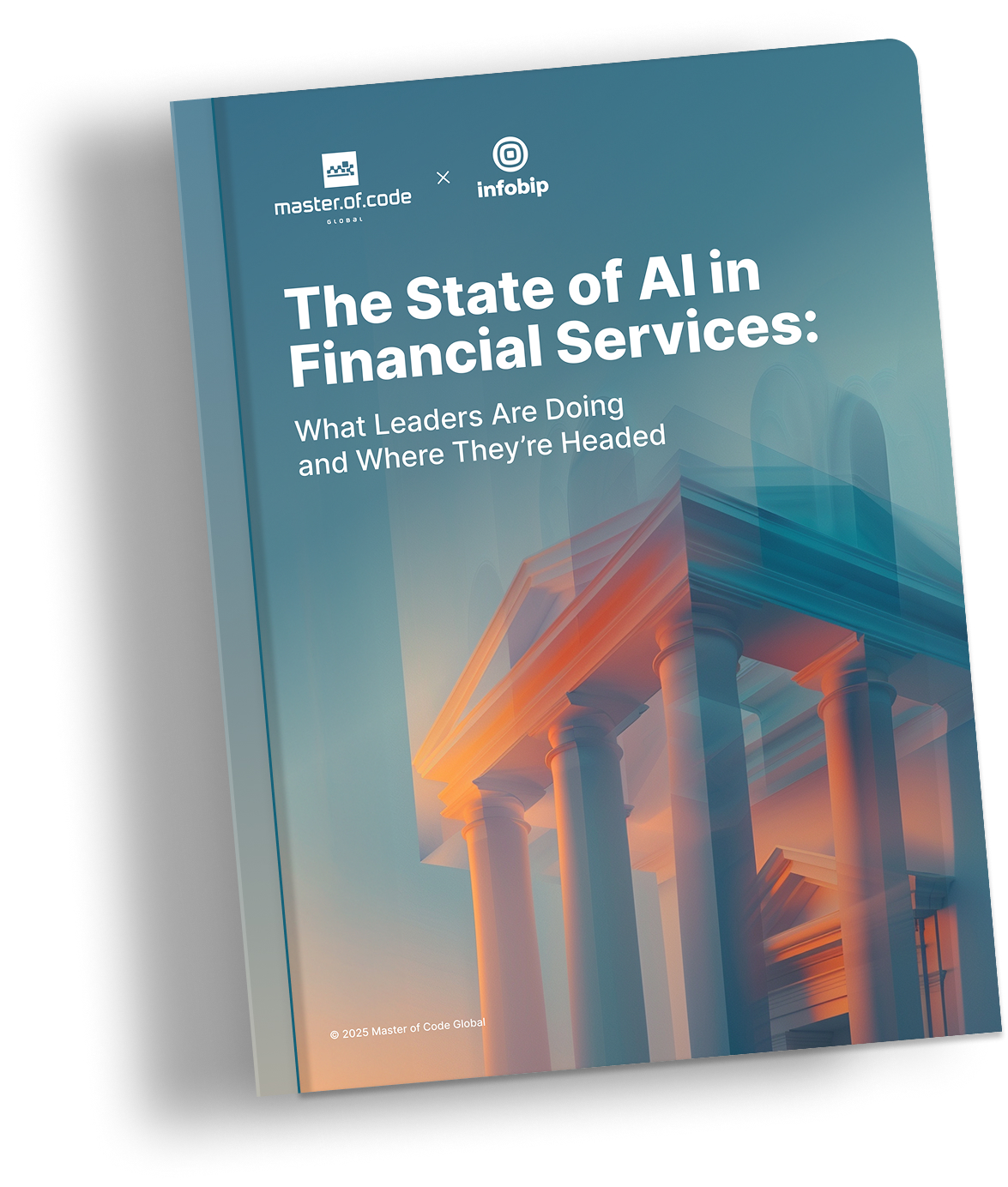
But there’s a gap between the money going in and the technology actually going live. Our The State of AI in Finance 2025 report, co-authored with Infobip and surveying 200+ finance executives, found that only 11% of financial institutions have deployed voice AI — even though 67% call Agentic AI a high priority. Budget isn’t the bottleneck: most of these firms spend $1M–$5M on AI annually. The sticking point is that leaders rate voice just 2.2 out of 5 in priority, because the cost structure, performance benchmarks, and return timelines remain murky.
Learn from 200+ finance executives about working AI solutions, risk management, and ROI they’re seeing.
That’s exactly what this article clears up. Below, we unpack every AI costing layer from platform fees and API pricing to team rates and industry-specific requirements. After reading, you can match the right approach to your situation and move forward without second-guessing the numbers.
Three Approaches to Voice AI Implementation
Not all systems are built the same way, and voice AI development costs shift dramatically depending on which path you take. Before diving into specific numbers, it helps to understand the three fundamental pricing models — and how they compare on what matters most: upfront investment, ongoing cost, deployment speed, and total cost of ownership.
| Metric | Off-the-Shelf Platforms | Cloud + Custom Build | Fully Custom |
|---|---|---|---|
| Upfront cost | $0–$500 | $25K–$150K | $50K–$300K+ |
| Annual run cost | $5K–$70K | Platform fees + $10K–$50K maintenance | $10K–$50K maintenance (no vendor fees) |
| Time to deploy | Days to weeks | 2–3 months | 4–12 months |
| Per-min cost at scale | $0.13–$0.33 | $0.06–$0.15 | $0.05–$0.15 (self-assembled) |
| IP ownership | ❌ | Partial | ✅ |
| Customization depth | Low | Medium-High | Unlimited |
| Best for | PoC, under 5K calls/mo | Defined use cases, existing cloud stack | High volume, regulated industries |
Let’s break each one down.
Off-the-Shelf Platforms
These are plug-and-play services — you configure a voice agent through a dashboard, connect a phone number, and go live in days. The appeal is obvious: no development team, no infrastructure decisions, no waiting months for a launch.
The catch is in the per-minute pricing. What vendors advertise and what you actually pay are two different numbers. The platform fee covers only the orchestration layer — routing your audio between a transcription engine, an AI model, and a voice synthesizer. Each of those components bills separately:
| Platform | Advertised Rate | True All-In Cost/Min |
|---|---|---|
| VAPI | $0.05/min | $0.18–$0.33/min |
| Retell AI | $0.07/min | $0.13–$0.31/min |
| Bland AI | $0.09–$0.11/min | $0.15–$0.30+/min |
| Synthflow | $0.08–$0.13/min | $0.08–$0.13/min (bundled) |
That gap matters at scale. VAPI’s $0.05/min platform fee balloons once you add transcription (Deepgram ~$0.01/min), the AI brain (GPT-4 ~$0.02–$0.20/min), voice synthesis (ElevenLabs ~$0.04/min), and a phone line (Twilio ~$0.01/min). Enterprise users typically spend $40,000–$70,000 per year on VAPI alone. Need HIPAA compliance? That’s an extra $1,000/month. These hidden fees accumulate quietly — and most teams don’t discover the true cost until they’re already locked in.
The hidden fees don’t stop at usage. Basic tiers rarely meet real production needs — professional plans often cost 3–5x more. Overage charges run 2–5x standard rates. And once your AI models, conversation data, and workflows live inside a vendor’s proprietary system, switching becomes painful. Price increases of 20–30% at contract renewal are common, and you have limited leverage to push back.
Where off-the-shelf works: Proving a concept, testing a use case internally, or handling low voice minutes volume with simple, predictable conversations.
Where it doesn’t: Anything involving deep system integrations, regulatory compliance, or more than a few thousand calls per month — the per-minute pricing compounds fast.
Cloud Platforms + Custom Development
This approach uses enterprise cloud services as the foundation — Amazon Lex for understanding speech, Google Dialogflow CX for managing conversation logic, or Azure Bot Service for orchestration — and layers custom code on top for your specific workflows, integrations, and business rules.
The platform pricing models are straightforward:
| Platform | Rate |
|---|---|
| Amazon Lex | $0.004 per speech request |
| Google Dialogflow CX | $0.06/min (voice), $0.12/min (generative) |
| Azure Bot Service | Free for 10K messages, then $0.50/1K |
What you spend on development depends on how much custom logic sits between the platform and your backend systems. A simple FAQ agent with calendar booking might cost $25,000–$50,000 to build. A multi-intent voice bot solution integrated with your CRM, payment processor, and authentication layer pushes toward $100,000–$150,000 — and integration fees can represent 20–50% of that total.
Ongoing costs include platform usage fees plus annual maintenance of 15–25% of the original build — typically $10,000–$50,000/year for model tuning, bug fixes, and conversation flow improvements.
Where this works: Organizations with a clear use case, an existing cloud relationship (AWS, GCP, Azure), and enough call volume to justify the build investment.
Fully Custom Voice AI
This is a purpose-built voice agent — designed from scratch around your specific business logic, data, compliance requirements, and user experience. You select every component independently and own the entire system.
In the market you can find plenty of options, we just selected the most common ranges. So, the voice AI implementation cost breaks down by project scope:
| Tier | Cost Range |
|---|---|
| MVP / Proof of Concept | $10K–$25K |
| Mid-tier (CRM integration, multi-intent logic) | $25K–$50K |
| Advanced (multilingual, compliance, analytics) | $50K–$150K+ |
| Enterprise-grade (custom ML, deep integrations) | $150K–$300K+ |
Several factors push costs toward the higher end. Adding multilingual support roughly doubles your voice synthesis costs because each language requires separate model training and voice selection. Building in emotion detection — where the agent adjusts its tone based on whether a caller sounds frustrated or confused — typically adds 20–30% to the budget. And system integrations (connecting to your CRM, ERP, core banking platform, or EHR) can inflate the total by 20–50%.
The total cost of ownership, however, often favors custom builds over time. Annual maintenance runs 15–25% of the initial investment, but there are no per-minute vendor fees eating into your margins as call volume grows. For organizations handling tens of thousands of monthly calls in regulated environments, this pricing model delivers the best operational scalability — and the only path to true IP ownership.
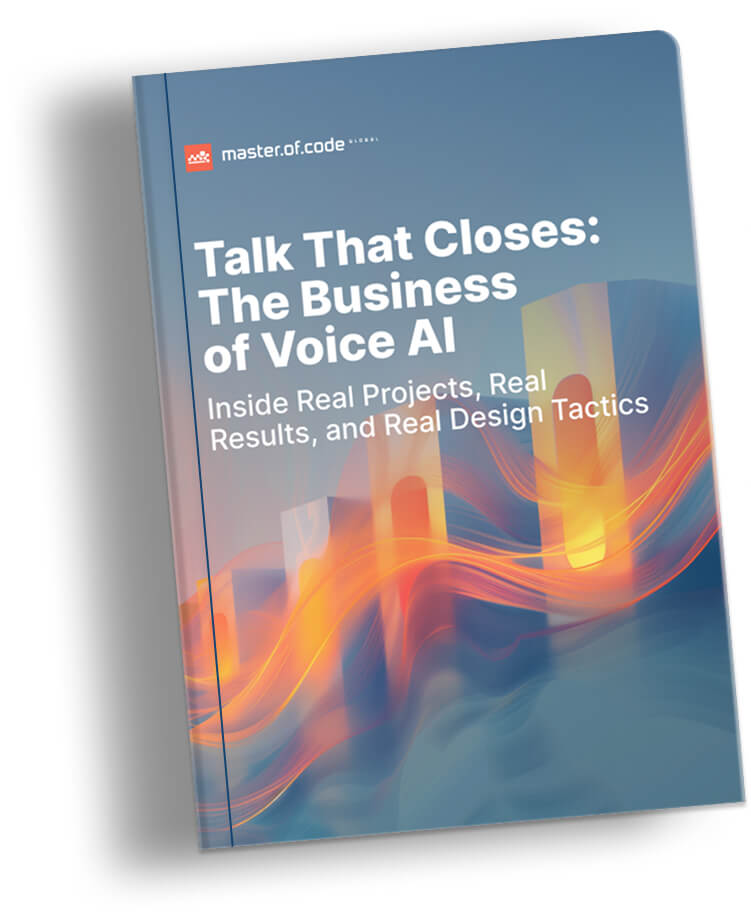
Learn the frameworks, strategies, and real-world examples behind high-performing voice assistants.
Voice AI Infrastructure Costs
So how much does voice AI cost at the component level? Every voice agent — whether off-the-shelf or custom-built — runs on the same basic stack: something to convert speech into text, an AI model to understand and respond, something to convert that response back into speech, and a phone line to deliver it. The difference in voice AI infrastructure costs is which providers you choose and how much you pay for each layer.
Here’s what each component costs right now.
Speech-to-text — the engine that transcribes what your caller says in real time:
| Provider | Cost/Min |
|---|---|
| AssemblyAI | $0.0025 |
| OpenAI GPT-4o Mini Transcribe | $0.003 |
| OpenAI Whisper | $0.006 |
| Google Cloud STT | $0.016 |
| Azure STT (real-time) | $0.0167 |
| Amazon Transcribe | $0.024 (drops to $0.0078 at 5M+ min/mo) |
The AI brain — the large language model that interprets intent, holds context, and generates the reply. This is typically the most variable cost. A lightweight model suited for routine FAQs costs pennies per conversation; a frontier model capable of nuanced, multi-turn reasoning costs significantly more:
| Model | Input / Output per 1M tokens |
|---|---|
| GPT-4.1 nano | $0.10 / $0.40 |
| GPT-4o mini | $0.15 / $0.60 |
| GPT-4o | $2.50 / $10.00 |
| Claude Sonnet 4 | $3.00 / $15.00 |
In practice, this means the LLM choice alone can swing your per-conversation cost by 10–50x. A simple balance-check agent running GPT-4.1 nano costs a fraction of a complex advisory agent on GPT-4o — but handles far less conversational complexity.
Text-to-speech — the voice your customers actually hear. Cheaper options sound robotic; premium voices are nearly indistinguishable from a human:
| Provider | Cost per 1M Characters |
|---|---|
| Google WaveNet | $4 |
| Amazon Polly | $4.80 |
| OpenAI TTS | $15 (HD: $30) |
| Google Studio (highest quality) | $160 |
Telephony — connecting the agent to an actual phone number so callers can reach it:
Twilio, the most common choice, charges $0.014/min for outbound calls, $0.0085/min for inbound, and roughly $1/month per phone number.
What does a fully assembled stack cost? When you source each component independently and optimize for your specific use case, the per-minute pricing lands between $0.05 and $0.15 at scale. That’s the true voice AI infrastructure costs baseline — before any development, integration, or maintenance work on top.
One more option worth noting: self-hosting AI models on your own GPU infrastructure (NVIDIA H100 instances run $1.49–$6.98/hour across cloud providers). This eliminates per-call API fees entirely, but only makes economic sense if you’re processing more than roughly 500 hours of voice minutes per month. Below that threshold, API calls are cheaper.
How Team Composition and Location Affect Your Budget
The technology is only part of the bill. Who builds your voice agent — and how you engage them — shapes the total investment just as much as the stack itself.
The core trade-off is straightforward: hiring in-house gives you full control but locks you into long-term salary commitments and a months-long recruiting cycle. A specialized development partner delivers production-ready expertise from day one, at a fixed project cost, with no headcount overhead.
| Factor | In-House Team | Development Partner | Freelance |
|---|---|---|---|
| Time to first deployment | 6–12 months | 2–4 months | 3–6 months |
| IP ownership | ✅ | ✅ (negotiable) | ⚠️ Varies |
| Domain expertise (finance, healthcare) | Must hire for it | Built-in | Rare |
| Ongoing optimization | Continuous salary cost | Retainer-based | Ad hoc |
| Compliance & security | Your responsibility | Shared (e.g. ISO 27001) | Your responsibility |
| Typical engagement cost | $500K–$1.2M/yr (3–5 people) | $50K–$300K per project | Unpredictable |
One pattern we see repeatedly: organizations start with freelancers or a small internal team to save money, then rebuild six months later when the solution can’t handle compliance requirements, scale, or production-grade conversation quality. The cheapest option upfront is often the most expensive one over 12 months.
How Costs Shift by Industry
Voice AI development costs don’t just vary by approach — they shift significantly by industry. The voice AI stack itself stays the same, but what you build around it depends on your compliance requirements, backend integrations, and conversation complexity. These are the real cost multipliers.
Financial Services
Finance and banking is where voice AI delivers the most dramatic returns — and where it demands the most engineering rigor. Security architecture alone (voice biometrics, encrypted authentication, PCI DSS compliance, fraud detection logic) can represent 25–40% of total project cost. Every conversation must connect to core banking systems in real time, and every interaction needs an auditable trail, making voice AI latency a critical consideration.
Our State of AI in Finance 2025 survey confirms the opportunity is massive but underleveraged: 97% of firms plan to expand agent-assist tools within two years, yet voice remains sidelined at 11% adoption. The firms that have moved first are seeing outsized results.
Case Study: Voice AI Agent for Financial Services
A leading EU financial institution — 600+ agents, 285,000 monthly calls, $14.8M in annual costs for routine inquiries — partnered with Master of Code Global to deploy a voice agent handling 58 conversational paths across balance checks, disputes, payments, and credit requests. The system now processes over 156,000 calls per month autonomously, with a call volume capacity that scales during peak periods without added headcount.
Results: $7.7M in annual savings | 94% first-call resolution | 88% customer satisfaction | 41% reduction in peak wait times
The payback period was measured in months, not years. For an ROI calculation benchmark, this project could turn $14.8M in annual labor costs for routine tasks into a system that handles more than half that volume at a fraction of the per-interaction cost.

Automotive
Dealerships operate across multiple locations, each with its own inventory, service calendar, and sales team. The main cost driver here isn’t AI sophistication — it’s integration depth. Connecting a voice agent to a dealer management system (DMS), syncing real-time vehicle inventory, and routing conversations to the right location adds significant development work on top of the core voice stack.
The payoff, though, is that voice AI for automotive captures leads around the clock — including evenings and weekends when dealerships are closed but buyers are actively shopping.
Case Study: Voice Agent for Automotive
A leading automotive group in the southwestern U.S. was losing leads after hours, dealing with inconsistent experience across dealership locations, and had no proactive post-purchase follow-up.
Master of Code Global built a voice AI agent that works as a 24/7 brand ambassador across the full buyer lifecycle. It captures leads around the clock — answering detailed vehicle questions, booking test drives into the dealership calendar, and routing to the right location based on real-time inventory. After purchase, the solution proactively reaches out for maintenance scheduling, warranty renewals, and service offers. Fully hands-free, integrated with the dealer management system, and working off live data rather than static scripts.
Results: 37% increase in lead conversion | 26% growth in test-drive appointments | 357 successful after-sales engagements in the first 2 months
E-Commerce & Retail
Speed matters more here than anywhere else. When a shopper abandons a cart, purchase intent decays by the hour — so the voice agent needs to act fast, connect across channels (call + SMS + messenger), and handle real-time product and pricing data from your store’s API.
The market is moving aggressively: 97% of retailers plan to increase AI spending, and the AI-in-retail market is projected to grow from $16.64B in 2026 to approximately $70.95B by 2035, expanding at a CAGR of 17.60% from 2026 to 2035.
Case Study: AI Lead Recovery Solution for Shopify
Around 70% of online shopping carts get abandoned, and traditional recovery methods — emails, retargeting ads — arrive too late. By the time the follow-up lands, purchase intent has cooled.
Master of Code Global built a GenAI-powered voice assistant that calls customers within 30 minutes of abandonment — long enough to avoid feeling intrusive, short enough that the shopper still remembers what caught their eye. The agent reminds them what they left behind, holds a natural two-way conversation about product details and shipping, and offers a discount. If they’re interested, an SMS arrives with a pre-filled checkout link, discount already applied. For calls that hit voicemail (59% of the time), the agent leaves a message with the code — and a significant share of recoveries came from those voicemails.
Results over 5 months of live testing: 121,491 abandoned checkouts processed | 6,754 answered calls | ~15% expected recovery rate | $28,000+ in recovered revenue
Healthcare
This is indeed the fastest-growing vertical for speech-enabled AI. The market for AI voice agents in healthcare is projected to surge from $468M in 2024 to $3.18 billion by 2030 at 37.8% CAGR, and physician AI usage jumped from 38% to 66% in a single year. The cost drivers are HIPAA-compliant infrastructure and deep integration with electronic health record (EHR) systems — both add substantial engineering scope on top of the base voice stack.
Insurance
Claims intake, policy lookups, multi-state regulatory compliance, and connections to underwriting systems make insurance voice agents among the most integration-heavy builds. 73% of insurance CEOs now call Generative AI a top investment priority, signaling that the industry is ready to move — but the complexity of claims processing workflows means the build requires serious architectural planning.
Use our executive tips to make your AI initiative really profitable: How to use Voice AI assistants
Why “Wait and See” Is the Most Expensive Option
The costs of building voice AI are visible. The costs of not building it are harder to see — but significantly larger.
Globally, $3.7 trillion in annual sales are at risk due to poor customer experience, according to Qualtrics XM Institute. At the interaction level, a human-handled call may cost up to $12 fully loaded, while an AI agent handles the same inquiry for $0.30–$0.50. Per voice minutes, that’s the difference between $0.42–$1.08 for a human and $0.08–$0.15 for AI.
Meanwhile, the people answering those calls are leaving. Contact center agent turnover runs up to 60% annually, with average tenure dropping to just 18 months. So, you’re not just paying for expensive calls — you’re paying to constantly replace the people making them.
The trajectory is clear. Gartner predicts that by 2029, Agentic AI will autonomously resolve 80% of common customer service issues, cutting operational costs by 30%. By the end of 2026, 40% of enterprise applications will integrate task-specific AI agents — up from less than 5% in 2025.
Any honest ROI calculation starts with comparing your current per-interaction cost against the fully loaded cost of an AI agent — and factoring in the hidden fees of the status quo: turnover, training, missed calls, and declining service quality. When you run those numbers, the question shifts from “can we afford to build this?” to “can we afford not to?”
For accurate budget forecasting, start with your current monthly call volume and average handle time. Map which interactions are routine and repeatable. Then match to the right approach using the cost frameworks above. That gives you a defensible business case — not a guess.
Ready to get specific? Share your project details, and our voice AI team will map your use case to the right approach — with a realistic voice AI development costs architecture before any commitment.

![Defeating Voice Latency in Finance to Achieve $7.7M in Annual Cost Savings [Real Clients’ Results]](https://masterofcode.com/wp-content/uploads/2026/01/Cover_-Managed-Dedicated-Team-640x400.jpg)