Get in touch

Your Business Vision Meets Technology Mastery Now

Want to discuss a project or digital solution?
Fill out the form below and we’ll be in touch within 24 hours.


    How did you find us?


    By continuing, you're agreeing to the Master of Code
    Terms of Use and
    Privacy Policy and Google’s
    Terms and
    Privacy Policy


    HIPAA-Compliant AI Health Companion for a US-Based Wellness Platform

    How Master of Code built a secure, Conversational AI assistant that guides patients through chronic health journeys — from Proof of Concept to production.

    A US-based digital wellness platform serving over 150 employer-sponsored programs across North America faced a growing gap between patient demand and available clinical support. Their members — dealing with conditions ranging from hormonal health changes to cardiovascular risk management — needed timely, trustworthy guidance without flooding already-stretched care teams.

    The company turned to Master of Code Global to design an AI-powered health companion that could deliver personalized, compliant, and clinically informed conversations at scale.

    Read on to see how this partnership reshaped the client's approach to chronic care engagement — and what it can mean for organizations wrestling with similar challenges.

    The Challenge

    How do you deliver round-the-clock, personalized health guidance to thousands of patients managing chronic conditions — while staying HIPAA-compliant, clinically accurate, and genuinely helpful?

    The client’s member base had grown 3x in two years. So had the volume of inbound questions: symptom tracking, medication reminders, lifestyle adjustments, lab result interpretation, and mental health check-ins. Their clinical team was fielding thousands of messages each week through a basic portal, and response times had stretched to anywhere from one to three business days. Members were disengaging. NPS scores dipped. Several enterprise clients flagged the deteriorating support experience in their quarterly reviews.


    At the same time, the company couldn’t simply hire their way out of the problem. What they needed was a front-line digital assistant capable of handling educational queries, guiding users through structured health journeys, and escalating complex cases to a human provider — all inside a secure, compliant framework. Off-the-shelf chatbot products fell short: they either lacked healthcare-grade privacy controls, couldn’t pull from the client’s proprietary clinical content library, or delivered the kind of robotic, impersonal experience that would only make engagement worse.

    Client Requirements

    The client’s product leadership defined three non-negotiable conditions before any development could begin:

    HIPAA compliance, end-to-end. The solution had to satisfy HIPAA’s technical safeguards across the entire data lifecycle — encryption in transit and at rest, role-based access controls, and full audit logging for every patient interaction. No exceptions, no shortcuts.

    Integration with existing clinical content. The platform had to plug directly into the client’s content ecosystem: clinical guidelines housed in Excel-based knowledge bases, a curated video library, and condition-specific resource links. Rebuilding or migrating that content was off the table.

    A path to human-in-the-loop oversight. Clinicians needed the ability to review bot-patient conversations, flag inaccuracies, and feed corrections back into the system on a daily basis. The AI couldn’t operate as a black box — ongoing clinical accountability was a hard requirement from day one.

    What We Created

    Master of Code Global designed and built a HIPAA-compliant Conversational AI assistant that walks patients through chronic health management journeys, from their first symptom questions to ongoing lifestyle coaching.

    Phase 1: Proof of Concept (8 Weeks)

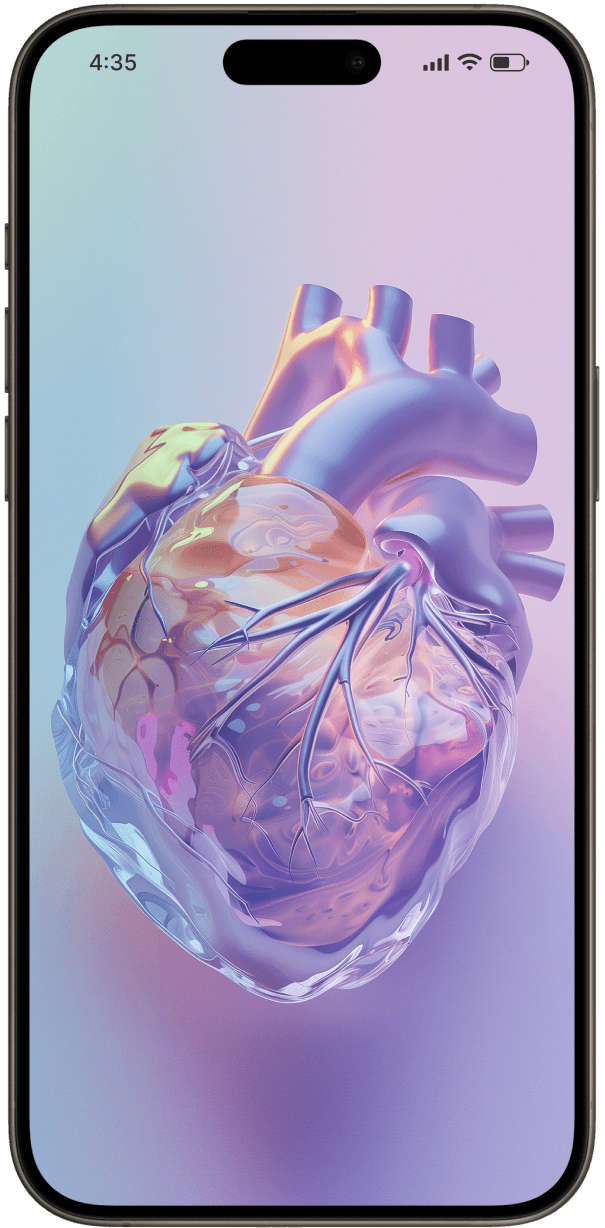
    The initial phase zeroed in on a single clinical pathway — cardiovascular risk assessment — chosen because of its high member query volume and clearly defined decision trees. The goal was straightforward: validate that an AI assistant could handle real patient interactions safely, accurately, and in a way that people actually wanted to use.

    Our team built a web-based chat interface integrated with a Retrieval-Augmented Generation (RAG) pipeline. The RAG engine ingested the client’s existing clinical content, which was predominantly housed in structured Excel files, and combined it with curated external resources — links to peer-reviewed articles, instructional videos, and condition-specific toolkits. When a patient asked about cholesterol management or blood pressure medication side effects, the bot didn’t generate answers from scratch. Instead, it retrieved the most relevant clinical content, synthesized it into a clear conversational response, and offered supplementary materials like videos or downloadable guides.


    The PoC also established the compliance foundation. All data flows were encrypted in transit and at rest, access controls followed the principle of least privilege, and every interaction was logged with full audit trails. We set up a sandbox environment on AWS with HIPAA-eligible services and ran penetration testing alongside the client’s security team before any patient-facing deployment.

    A pilot group of 500 members tested the cardiovascular pathway over four weeks. The results cleared every success gate the client had defined: 80% of queries were resolved without clinical escalation, user satisfaction scores averaged 4.3 out of 5, and zero compliance incidents were flagged.


    Phase 2: Full-Scale Development (16 Weeks)

    With the Proof of Concept validated, Phase 2 expanded the platform across four clinical domains: cardiovascular health, hormonal health and menopause management, Type 2 diabetes support, and stress and anxiety resilience. Each domain introduced its own set of patient journeys — structured dialogue flows that adapted based on patient responses, health history, and stated goals.

    The conversational architecture grew significantly. We implemented multi-turn chat management so the bot could maintain context across extended interactions, remembering that a patient had mentioned difficulty sleeping three messages ago and weaving that context into later recommendations. Conditional branching let the assistant tailor its approach: a newly diagnosed diabetic would get a different conversation arc than someone managing the condition for years. And the RAG pipeline was expanded to handle a broader content library — over 2,000 clinical documents, 350+ videos, and region-specific resource directories.


    This phase also introduced the human-in-the-loop workflow. Clinical reviewers gained access to a moderation dashboard where they could audit bot-patient conversations in near real-time, flag responses that needed correction, and push refined training data back into the system on a daily cycle. This wasn’t a set-it-and-forget-it deployment. The model improved week over week because real clinicians were actively shaping its behavior.

    We also tested an AI-powered talking head avatar for the hormonal health and menopause pathway, based on early user research showing that women in this demographic responded more positively to a visual, empathetic presence. The avatar delivered spoken responses synchronized with facial expressions, creating a more personal interaction. While not activated for all pathways in the initial rollout, the avatar integration was built to be modular and could be extended across other clinical domains.

    The Results

    Technologies Used

    • AWS
    • GPT-4o
    • LangChain
    • Node.js
    • Python (FastAPI)
    • React.js
    • React Native

    What We Achieved

    • HIPAA-compliant platform with end-to-end encryption, access controls, audit logging, and BAA-backed infrastructure.
    • Four adaptive clinical pathways personalized by patient history, goals, and real-time inputs.
    • Human-in-the-loop moderation dashboard for daily conversation review, flagging, and model retraining.
    • RAG-powered retrieval across 2,000+ documents, 350+ videos, and Excel-based clinical guidelines.
    • Scalable microservices architecture ready for new clinical domains without rearchitecting.
    • AI avatar integration for the hormonal health pathway with measurably higher satisfaction scores.

    Your Business Vision Meets Technology Mastery Now

    Want to discuss your project or digital solution?
    Fill out the form below and we’ll be in touch within 24 hours.


      How did you find us?


      By continuing, you're agreeing to the Master of Code
      Terms of Use and
      Privacy Policy and Google’s
      Terms and
      Privacy Policy