Master of Code Global rebuilt how the team plans, builds, and reviews features. AI now writes the first version of each feature from a detailed spec, and the team reviews it before release.
Niels Herregodts
CEO at GTO LAB
I'd recommend it. We've had basically no problems since we started using it. Something that would normally take a month now takes about a week.
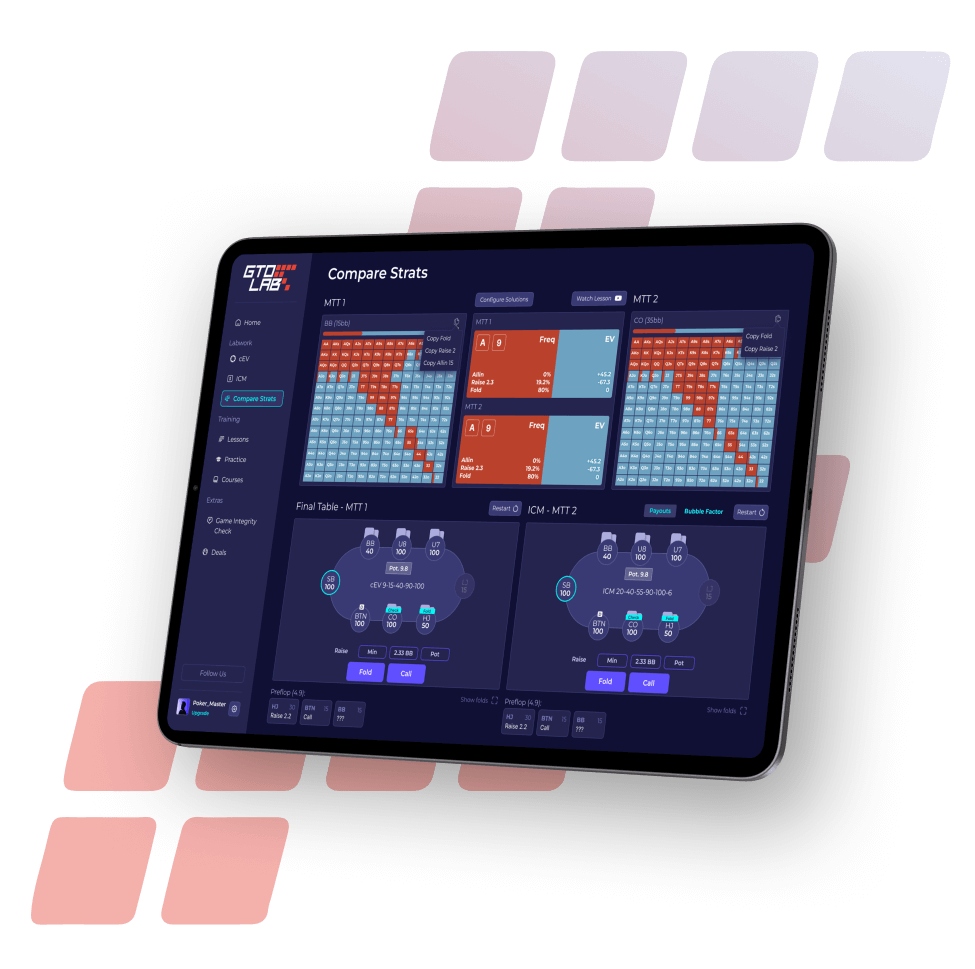
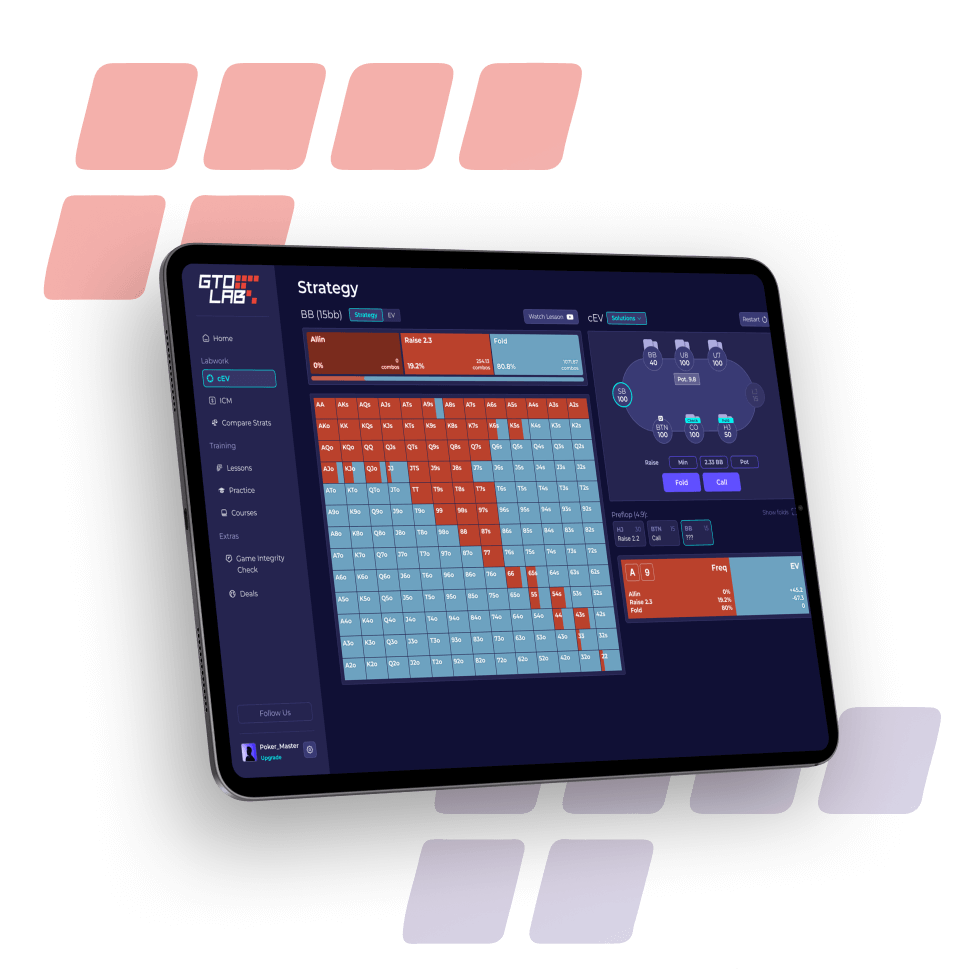
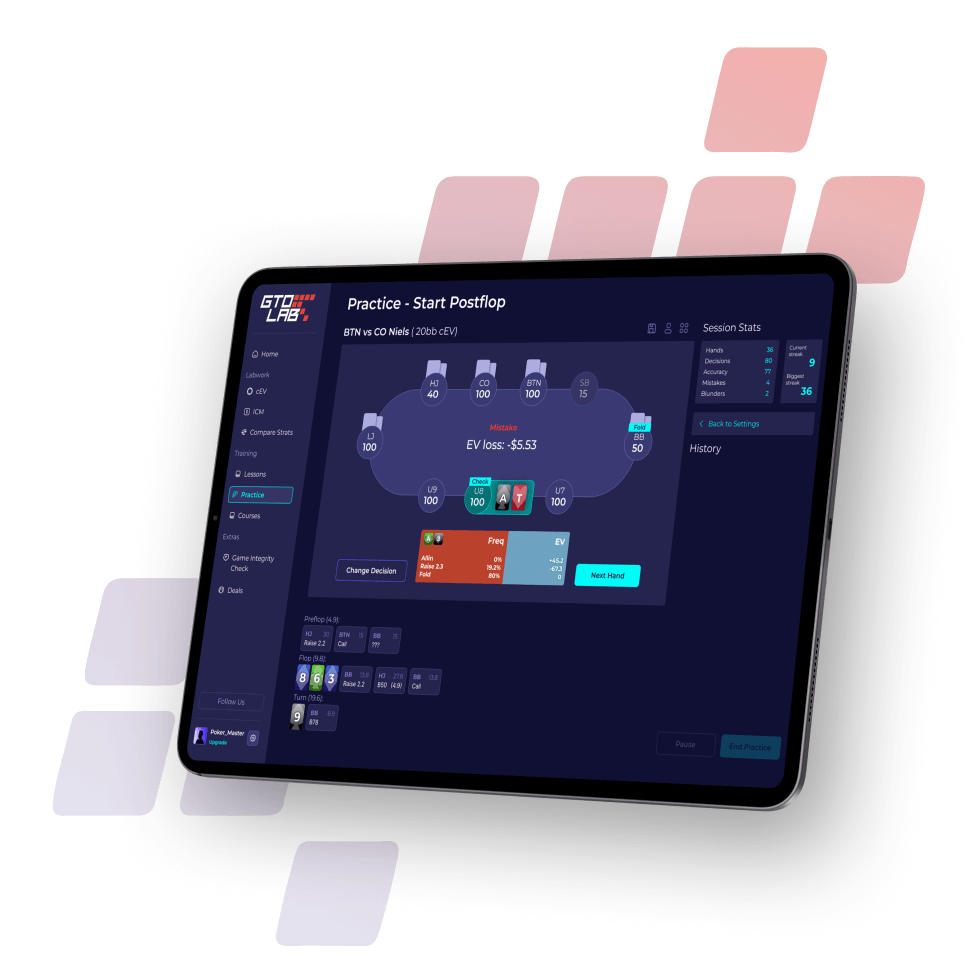
GTO LAB is a poker training platform.
Players use it to practice with data-driven tools, track detailed statistics, and learn through structured masterclasses.
New drills, stats views, and learning content keep players coming back. That makes the speed and reliability of feature delivery a business issue for GTO LAB.
GTO LAB’s developers already used AI tools and a shared context file. But the development process around those tools stayed the same. Every feature still needed full designs and mapped user flows before anyone wrote code.
As a result, a medium-sized feature took about a month from idea to release.
AI-written code also brought a new problem. It was fast but unpredictable. Small, hard-to-spot bugs slipped through review and were usually found only after release.
Why this hurt the business
A slower roadmap. At about a month per feature, new drills, stats views, and learning tools reached players slowly, and every new idea waited its turn.
Potential loss of trust in the product. GTO LAB sells precise, data-driven practice. A wrong number in a statistics view undermines the main reason players pay for it.
Unplanned work. Each bug found after release meant an urgent fix. That pulled developers away from planned features and further slowed the roadmap.
GTO LAB had AI in its workflow, but was not getting the speed or quality it expected. The team wanted to change how features were built, with AI at the center of the process.
Master of Code Global changed the order of work. Now, AI writes the first version based on a detailed spec, and the team reviews, corrects, and approves it.
AI tools used to work from one general context file, which is like briefing a new developer with a single page of notes. Now each part of the system has its own detailed specification, so the AI knows what to build and how it should behave.
A feature starts as a prototype in Figma Make and becomes a formal task specification. OpenSpec and FlowForge turn that task into precise, machine-readable instructions, and AI agents write the code. The whole team now follows the same steps.
The first AI-built version goes to an isolated test environment, outside the release pipeline. Designers and stakeholders review it in two to three rounds before release.
We tested the workflow on two live feature pages first, so the team could see it work on real product tasks. Then we set it up in GTO LAB’s own repository and trained the team to run it. We stayed on for follow-up support while it became routine.
The hardest part was replacing a patchwork of individual AI habits with one shared way of working. The pilot pages settled that: the team saw the workflow deliver on real product work before it became the default.
We measured GTO LAB’s git history and Jira records before and after the switch. On comparable medium-complexity tickets, active work dropped from about 9 days to under 4.5 days. That covers development, review, and QA combined.
GTO LAB describes the change as a month becoming a week. The two numbers measure different things. Much of the old month was time before work started, while a feature waited in the backlog. Our measured gain is in active work, once a ticket starts.
Better quality
GTO LAB reports that:
– The subtle AI-caused bugs that used to reach production haven’t come back since the switch.
– The code reads and behaves far less like generic AI output.
– The workflow is now the default for new feature pages, beyond the original pilot.
Niels Herregodts
CEO at GTO LAB
It's just better than working from a simple context file. With detailed specs for each part of the project, the output looks and behaves a lot less like typical AI-generated code.
We set up the process that lets those tools deliver. Here’s what we do:
Map your current flow. We review how features move from idea to release and where AI is already used.
Write the specs. We create detailed specifications for each part of your product, so AI tools work from precise intent.
Connect your tools. We integrate design, task specs, and AI agents into a single delivery chain that fits your stack.
Set up review loops. AI-built versions go to an isolated test environment and pass human review before release.
Prove it on live work. We pilot the workflow on one or two real features, so your team sees results early.
Train and support. We set everything up in your repository, train your team, and support you until it runs as routine.
Want to shorten your team’s engineering cycle the way GTO LAB did?
Contact us to talk through your current workflow