


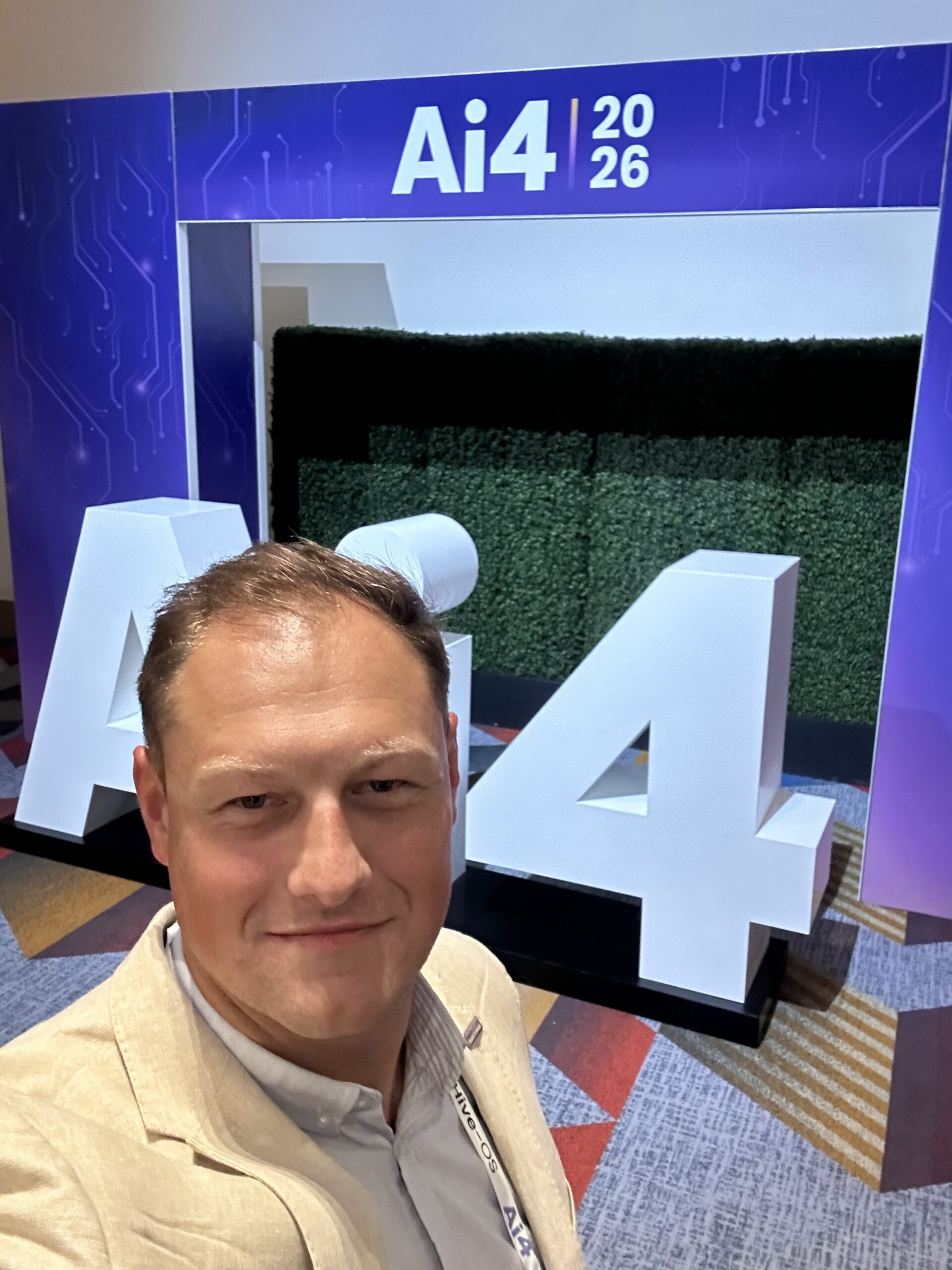
August 25, 2026 – After returning from Ai4 2026, our team compared notes from conversations across the event. One message came through clearly: many businesses are interested in AI, but still lack a realistic way to adopt it.
The event floor was full of enterprise AI platforms and ambitious promises. Yet many attendees could not picture how those systems would fit into their operations next quarter. They did not need another vision of the distant future. They needed someone to explain what the first practical step should be.
Here are the main insights Oleksii Morgun, AI Solutions Business Development Manager, brought back from Ai4.


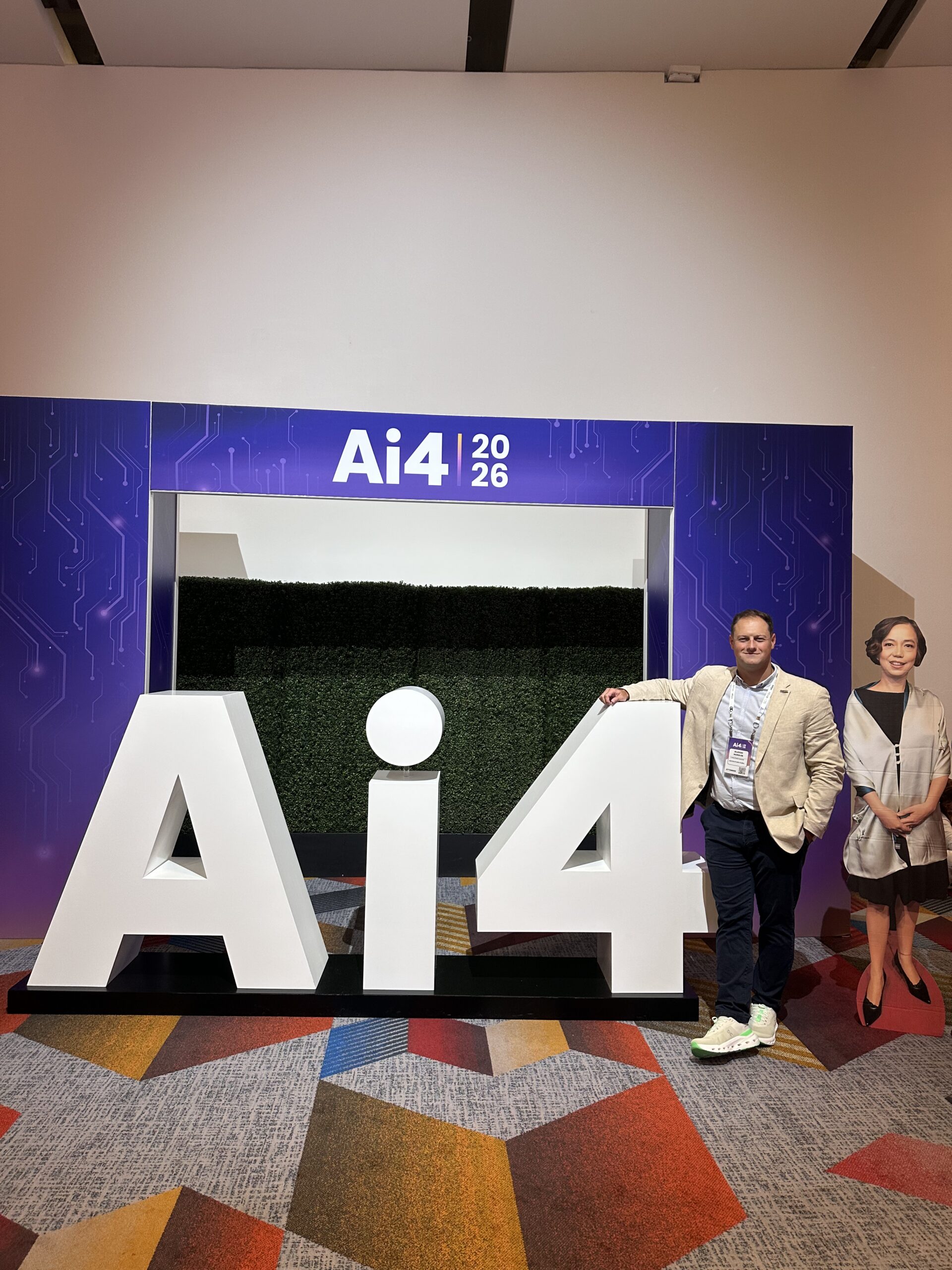

Businesses Need a Realistic Starting Point
Many AI conversations begin with advanced agents and autonomous systems. For most businesses, that is too far ahead of their current reality.
The conversations that resonated most started somewhere simpler. We discussed narrow business cases, rule-based automation, and structured workflows. These can later evolve into more autonomous systems.
This approach gives teams time to build the right foundation. It also helps them learn how artificial intelligence fits into their everyday work.
Many businesses are being shown the final destination without a realistic path to reach it. The most productive conversations at Ai4 focused on starting with one real process, moving at the company’s pace, and building from there.
The first step does not always need to involve AI. It may begin with mapping an existing process or automating a repetitive task. What matters is solving a real operational problem and creating room to grow.
The Knowledge Problem Often Comes Before the AI Problem
Another issue appeared in almost every serious conversation. Business knowledge is often scattered across systems, documents, teams, and individual employees. Tools may collect information, but they do not always connect or orchestrate it. Many companies have not mapped where their information lives or which source should be trusted.
This makes AI implementation much harder. Adding another intelligent layer does not fix an unorganized knowledge foundation. Thus, before choosing a platform, businesses should understand:
- Where important information is stored;
- Which systems contain trusted data;
- What knowledge exists only in employees’ heads;
- Who owns and updates each information source;
- What information an AI system should access.
Sometimes, a company has to take several steps back before moving forward. It may need to organize its data, connect existing systems, or build a shared knowledge base first.
The challenge isn’t what you can add on top. It’s what you’re building on.
AI Adoption Is Growing Faster Than AI Governance
Many employees already use intelligent tools at work. They experiment with chat tools, coding assistants, and personal accounts. Some achieve strong results and share their methods informally with colleagues.
However, these individual successes do not create a company-wide process.
Leaders know that employees are using AI. They also know that this activity is often unstructured. There may be no clear policy explaining which tools are approved, what information employees can share, or who is responsible for the output.
This creates operational and security concerns. It also makes successful use cases difficult to repeat across the organization. Therefore, businesses need a shared approach that covers:
- Approved tools and accounts;
- Suitable use cases;
- Data and code restrictions;
- Human review requirements;
- Responsibility for AI-generated work;
- Employee training;
- Evaluation of new tools.
Governance should not stop employees from experimenting. It should give them a safe and consistent way to do it.
People Need Support, Not Just Another Tool
One of the strongest lessons from Ai4 was that businesses want guidance throughout the adoption process. They do not simply want someone to install an autonomous system and leave. They want help understanding what to implement, how to prepare their teams, and how to develop internal capabilities.
That process should move at the company’s actual operating speed. It should also involve the people who will use the technology every day.
Employees understand where processes slow down. They know which tasks create frustration and where information gets lost. Their input helps businesses choose more relevant AI use cases.
Teaching and building should happen together. Teams need opportunities to test tools, understand their limits, and learn how their work may change. This people-first approach can turn AI from an isolated project into a repeatable business practice.
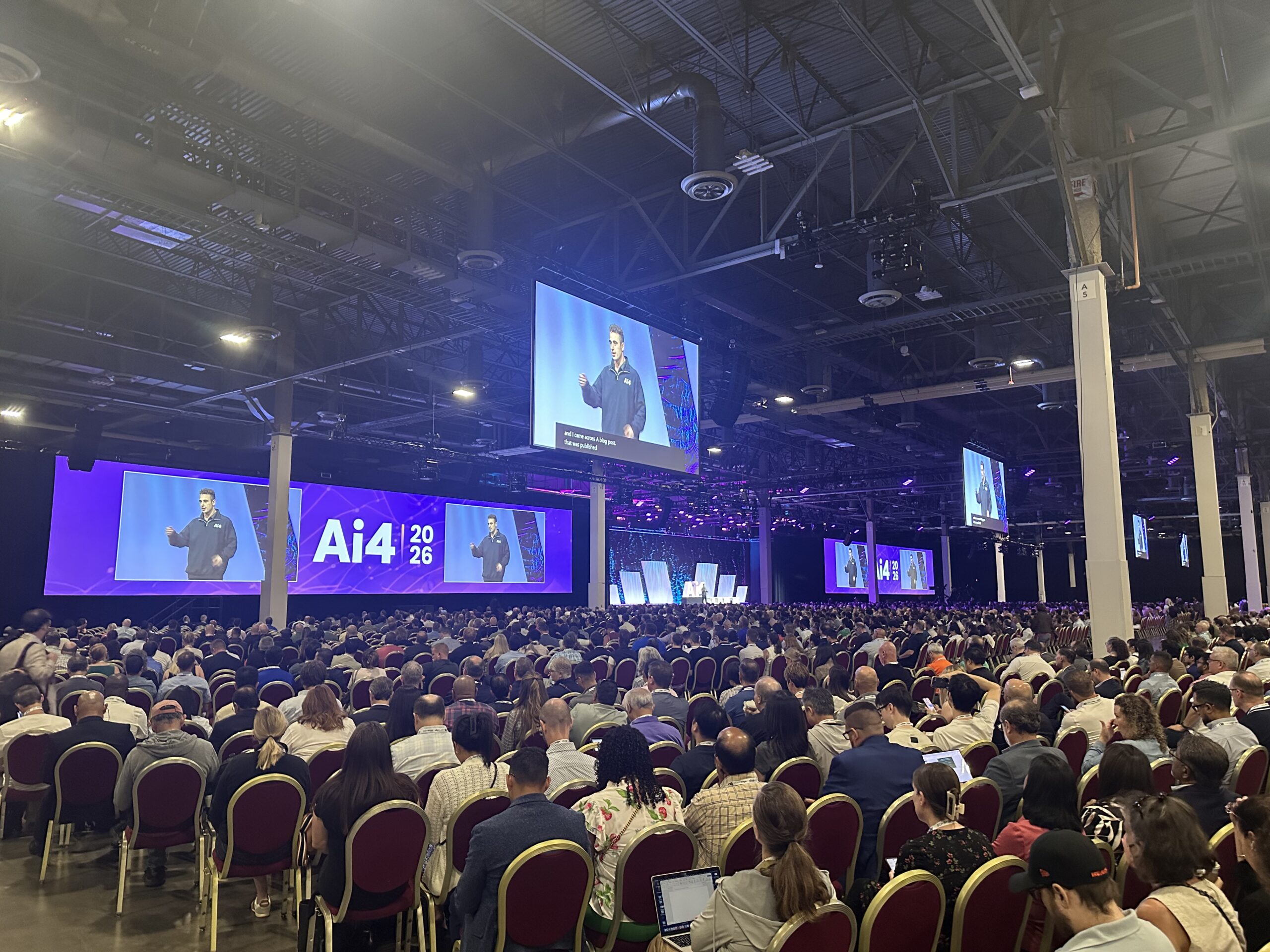



AI Maturity Is Less Advanced Than the Market Suggests
The overall market may appear much further ahead than it really is.
At Ai4, we met leaders who were still exploring basic use cases. Some had tested AI but struggled to build on what proved valuable. Others discovered that their data or internal processes were not ready.
This does not mean businesses are falling behind. Many are facing the same questions:
- Where should we start?
- Which use case is worth pursuing?
- Is our data ready?
- How should employees use AI?
- What needs to be governed?
- When should we consider AI agents?
Businesses should not feel pressured to jump straight into the most advanced system available. A smaller, well-defined initiative may create more value than an ambitious project built on an unstable foundation.
The Practical Path Forward
The main takeaway from Ai4 is simple: businesses need a path, not another pitch. That path may start with one workflow, one knowledge gap, or one team. It should reflect the company’s current processes and technical readiness.
From there, the organization can build stronger data foundations, introduce governance, and develop employee skills. More advanced automation can follow when the business is ready for it. AI agents may still be the long-term goal. But the first step should solve a real problem today.
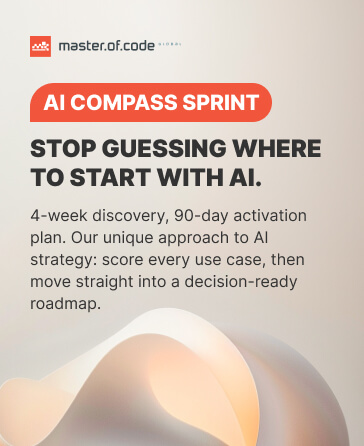
If you are still deciding where to begin, our AI Compass Sprint can help you assess your readiness, prioritize the right opportunities, and define a clear path forward.
*These images are included as part of our editorial non-commercial coverage of Ai4 2026. If you appear in a photo and would like it removed, please contact us.
About Master of Code Global
Master of Code Global is an AI consulting and engineering company that helps organizations move from AI strategy to implementation. They support the complete transformation journey, covering readiness assessment, use case prioritization, solution architecture, pilot validation, custom development, integration, deployment, workforce training, and ongoing optimization.
About Ai4
Ai4 is an enterprise AI conference that brings together business executives, technology leaders, researchers, startups, and solution providers. The event focuses on practical AI adoption across industries. Its topics include generative AI, AI agents, machine learning, automation, data infrastructure, governance, and responsible AI.